
The event planning cycle
Event planners don't book venues the week before. They research and shortlist weeks or months ahead. Your marketing needs to be live when they're searching, not when the event happens.
Typical lead times:
- Christmas parties: Booked June to October. Peak search period: August to September.
- Summer parties: Booked January to April. Peak search period: March to April.
- Conferences: Booked year-round with a spike in January to March as companies set annual calendars.
- Away days and team building: Booked 4 to 8 weeks ahead, with spikes after company fiscal year starts.
- Awards ceremonies: Booked 3 to 6 months ahead. Research peaks differ by sector.
- Private dining: Shorter lead time. Often booked 2 to 4 weeks ahead. Steady demand year-round.
Quarterly game plan
Here's how to coordinate your three Growth tools across the year:
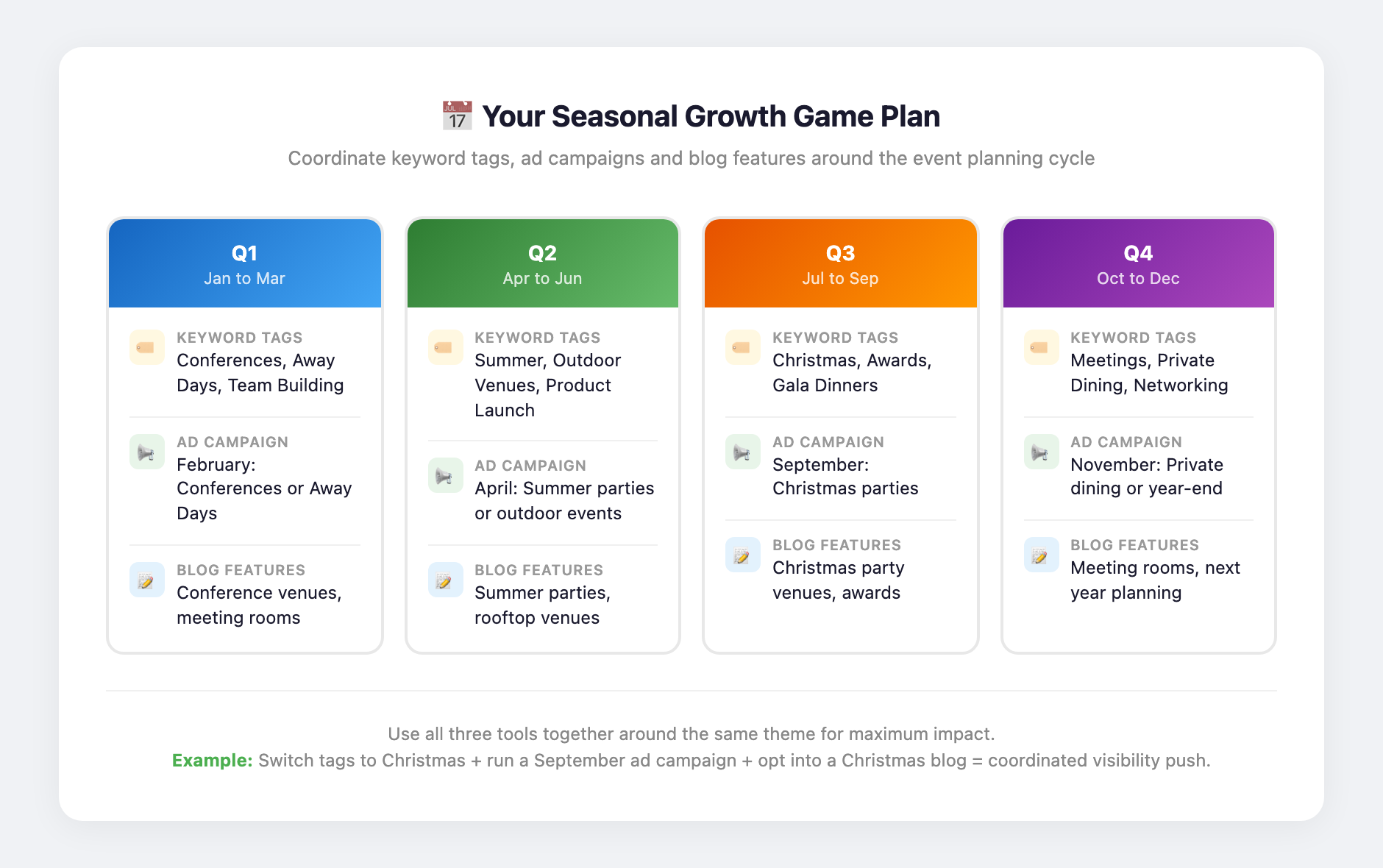
Q1: January to March
- Keyword Tags: Conferences, Away Days, Team Building
- Ad Campaign: Run one in February targeting conferences or away days (companies planning their annual event schedules)
- Blog Features: Opt into spring blogs about conferences, meeting rooms or team-building venues
- Why: New year, new budgets. Companies are planning their events calendar for the year. Conference and away day searches peak now.
Q2: April to June
- Keyword Tags: Summer, Outdoor Venues, Product Launch
- Ad Campaign: Run one in April or May targeting summer parties or outdoor events
- Blog Features: Opt into summer event blogs (outdoor spaces, summer parties, rooftop venues)
- Why: Summer event planning is in full swing. Outdoor venue searches hit their peak. Product launch season for many industries.
Q3: July to September
- Keyword Tags: Christmas, Awards, Gala Dinners
- Ad Campaign: Run one in September targeting Christmas parties (this is when the bulk of Christmas bookings are made)
- Blog Features: Opt into Christmas party blogs (these publish in summer/autumn to catch early planners)
- Why: It feels early, but this is when Christmas party research peaks. Awards season planning is also underway. Switching your tags now puts you ahead of venues that wait until November.
Q4: October to December
- Keyword Tags: Meetings, Private Dining, Networking
- Ad Campaign: Use your remaining campaign (if you have one) for private dining or end-of-year events
- Blog Features: Opt into January/February blogs for next year (conference and new year planning content)
- Why: Christmas is mostly booked by now. Shift focus to year-round event types and start positioning for Q1 of the following year.
Combining tools for a coordinated push
The real power of Growth Prime comes from using all three tools together around the same theme. For example:
Christmas party push (August to September):
- Switch your keyword tags to: Christmas, Office Christmas Parties, Corporate Entertainment
- Schedule your September ad campaign targeting "Christmas Party"
- Opt into the "10 Cracking Christmas Party Venues" blog publishing in June or the "Christmas On A Budget" blog in August
All three tools now point in the same direction: when a planner searches for Christmas party venues, your venue appears in search results (keyword tags), in Google ads (campaign) and in the blog post they're reading for inspiration (blog feature).
Conference push (January to February):
- Switch your keyword tags to: Conferences, Large Conference Venues, Hybrid
- Schedule your January or February ad campaign targeting "Conference"
- Opt into the "Top Conference Venues In London" blog publishing in January or March
One thing to avoid
Don't use all 3 ad campaigns in the same quarter. Spread them across the year so your venue has paid visibility in multiple peak periods, not just one concentrated burst.
Review and adjust
Check your Growth Dashboard monthly. If a keyword tag isn't generating the impressions you expected, swap it out. If a particular event type is trending in your enquiries, lean into it with your next campaign or blog opt-in.
Growth tools are not set-and-forget. The venues that get the most from them are the ones that review and adjust regularly.